

Evidence file · checked 12 September 2026
Tomi.club in the Maldives: What the Evidence Shows
Source captures
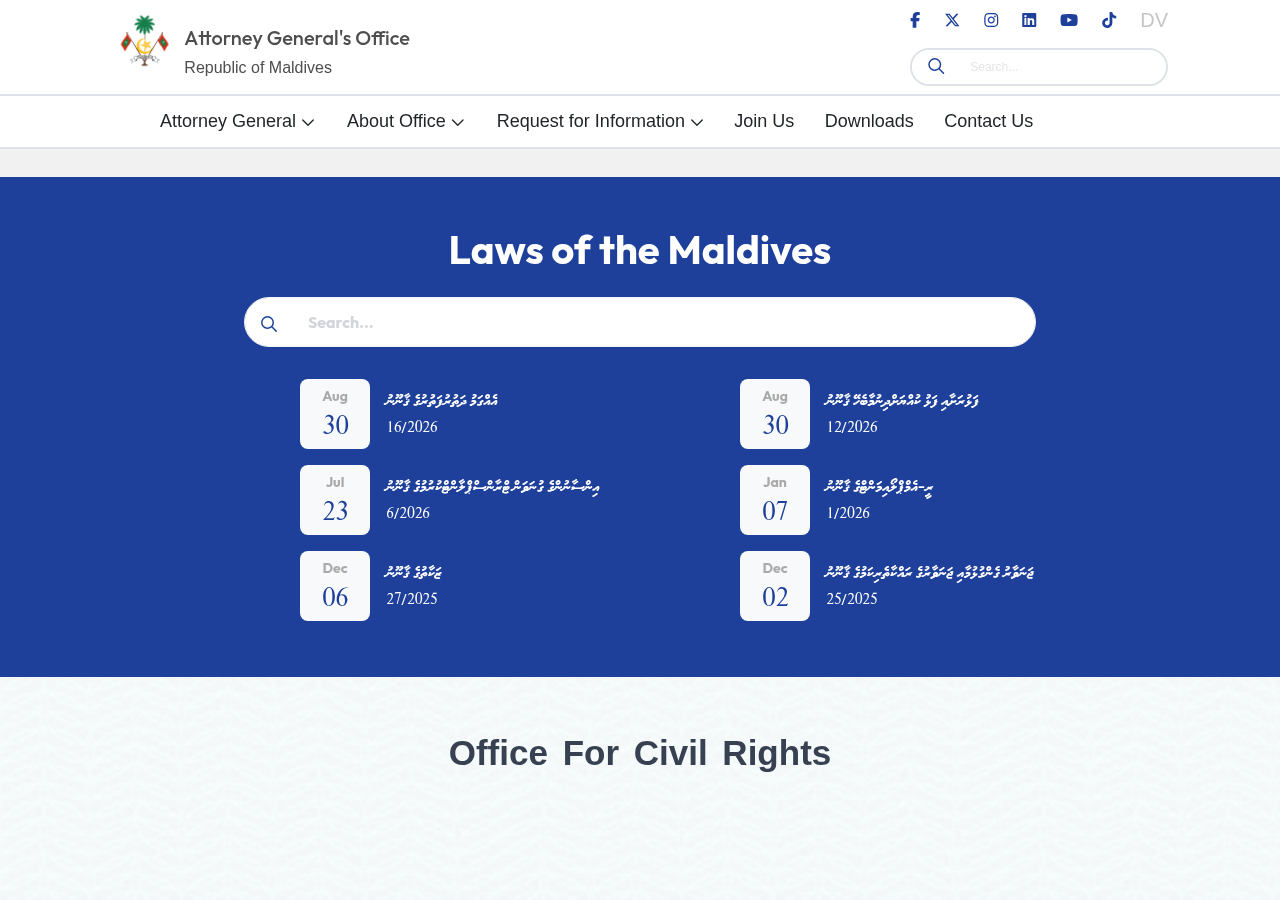
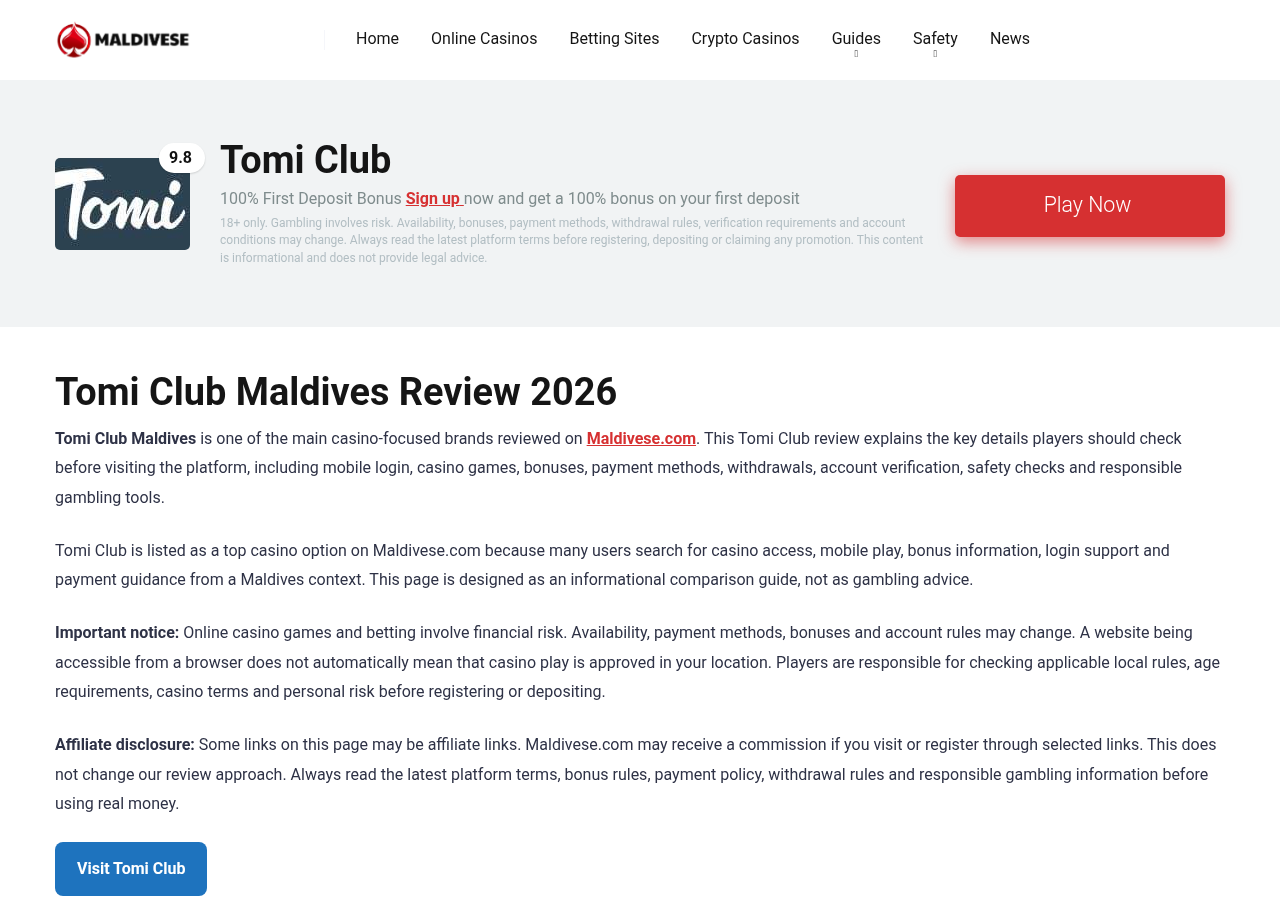
Continue only after checking the current terms
The commercial route does not link directly to the operator.
What can be concluded about Tomi.club in the Maldives?
The dated material does not establish that tomi.club holds a Maldives licence, and it also does not establish that the service is unlawful or unavailable. On the Attorney General’s Office catalogue page reviewed on 12 September 2026, no local online-casino domain licence register was identified. That narrow finding is not a legal ruling. A separate Maldives-focused comparison page names Tomi.club, which supports local context only. The evidence status remains amber and open: local approval, the contracting entity, territorial eligibility and service conditions are not resolved by these records.
The useful distinction is between a record of local interest and a record of regulatory status. A comparison listing can explain why the brand is relevant to readers in the Maldives; it cannot show that the operator accepts customers there, that a particular host is currently operating, or that local requirements have been met. Equally, the reviewed law catalogue is a source to consult, not a complete finding about every applicable rule. The conclusion should remain limited to what these dated materials actually document.
How to read the dated source captures
The captures serve different purposes and should not be combined into a stronger claim than either supports. The official catalogue is primary for the narrow point that it is the Attorney General’s Office catalogue of Laws of the Maldives and that the reviewed page did not identify a local online-casino domain licence register. It does not verify Tomi.club’s legal entity or licence. The comparison capture is contextual: it identifies Tomi.club as a comparison subject in Maldives-specific material, but does not establish availability, legality, safety or performance.
| Record | Evidence role | Supported use | Not established |
|---|---|---|---|
| AGO-LAWS, captured 12 September 2026 | Primary local reference | Identify the reviewed official law catalogue and the limit of what that page showed | A complete legal opinion, a domain licence register, or a Tomi.club licence decision |
| MP-TOMI, captured 12 September 2026 | User-context material | Confirm that a Maldives-focused page identifies Tomi.club Casino as a comparison subject | Measured search demand, customer access, licensing, safety or user experience |
| CTX-TOMI, captured 12 September 2026 | User-context material | Note that no sufficiently attributable public complaint capture was available in the reviewed context | That no complaints exist, or that complaints were investigated and resolved |
MP-TOMI and CTX-TOMI point to the same comparison page, so they are not two independent confirmations of customer experience. Their separate ledger entries describe separate narrow uses of the same contextual material. Neither is a regulator record or an operator statement. Dates matter: these are captures from 12 September 2026, not a promise that the content, site status or any terms remain unchanged later.
Exact host and contracting entity checks remain open
A brand name is not enough to identify the party responsible for a particular transaction or set of terms. The exact host matters because similarly named pages, alternate domains, redirects and copied branding can refer to different services. The supplied material records tomi.club as the exact domain under review, but it does not include a current operator terms capture that links that host to a named contracting entity. The saved summary mentions an offshore association; the accepted dated source records supplied here do not include the underlying register entry. That association should therefore not be treated as independently confirmed in this analysis.
| Check | Evidence that would be needed for a supported statement | Status in the supplied packet |
|---|---|---|
| Exact host | A dated capture showing the complete host and the page or terms to which a claim applies | tomi.club is the domain under review; current operation and any redirects are not established |
| Contracting entity | A dated terms or legal notice tying the exact host to a named entity and jurisdiction | No accepted operator terms or legal notice is supplied |
| Licence association | A primary or otherwise attributable record matching the entity, domain, licence and relevant territory | No such record is supplied for a Maldives authorisation |
These checks should be kept linked. A licence statement about a company, without a match to the exact host and the relevant territory, cannot by itself establish the status of tomi.club for a Maldives reader. Likewise, an entity name in a secondary register monitor summary is not a substitute for an attributable underlying record. If a later review obtains a dated terms capture or registry record, it should preserve the document date and the exact domain and entity wording rather than silently replacing the current uncertainty with a broad brand-level claim.
Local approval and territorial access are different questions
The Attorney General’s Office catalogue is an official local reference, but the narrow source record does not say that every relevant permission or rule is listed on the reviewed page. The fact that a domain-specific register was not identified there does not establish that no applicable law, oversight, restriction or player protection exists. Nor does it prove that Tomi.club is permitted. No conclusion about domestic law or a person’s rights should be drawn solely from this catalogue-page observation.
Territorial access is also unresolved. The supplied evidence contains no current restricted-country list, no Maldives-specific eligibility statement and no dated terms showing which entity would contract with a customer in the Maldives. A statement that a site is reachable from a location, if one were made, would still not establish authorisation or eligibility. Conversely, missing evidence of a restriction is not proof that access is allowed. These are separate questions and require dated, attributable records before either can be answered.
For a future evidence check, record the date and exact host shown in each source, then compare any territorial statement with the named contracting entity and the applicable primary records that can be identified. If the documents conflict, preserve the conflict and report the uncertainty instead of choosing the most reassuring version. The available packet does not permit a definitive answer about local approval, territorial eligibility or the legal effect of any offshore association.
Terms and regional restrictions need dated versions
No operator terms, bonus conditions, restricted-country list, identity-verification rules or complaint process are included in the accepted source records. It is not possible to state what Tomi.club currently requires, permits or excludes for Maldives residents. General assumptions based on practices at other operators would not fill this gap: rules can differ by entity, territory, product and document version.
A useful terms review keeps the page date and its scope visible. A page captured for one host or legal entity should not be applied to another without a documented link. No supplied capture here resolves any of those points, and no account or service test has been performed.
The reviewed material therefore supports an open-check status, not a claim that a specific restriction applies or does not apply. A reader comparing documents should distinguish an operator’s own statement from independent confirmation, and should treat a missing document as unknown rather than as proof in either direction. No direct operator destination is provided here.
Payments, identity checks and payout claims are unverified
There is no evidence in the packet identifying a payment method, processor, currency, minimum or maximum amount, fee, processing period, identity-check rule or withdrawal route for Tomi.club. No deposit or withdrawal test has been performed. Accordingly, claims about speed, reliability, limits, successful payouts or available payment options would be unsupported. A product description or an anecdote would not replace a dated record tied to the exact host and entity.
| Topic | Evidence needed before making a factual claim | What the supplied records show |
|---|---|---|
| Payment options and currency | A dated, attributable terms or cashier record tied to the relevant host and territory | No method, processor or currency is verified |
| Verification and conditions | Versioned terms explaining applicable identity checks and any stated conditions | No KYC or account rules are supplied |
| Payout timing or outcome | A documented, attributable record with dates and context; a single claim would still need careful qualification | No withdrawal test or payout result is available |
| Fees, limits and disputes | Applicable terms or a competent, attributable record identifying the exact condition | No fee, limit or complaint-resolution result is verified |
Even a future document that lists a payment option would establish only that the document made that statement at the time captured; it would not prove that a transaction succeeds for every person or that a payout will be made by a particular time. A report about an individual experience, if later found, would need a date, sufficient context and careful attribution. No payment should be made to create evidence for this dossier, and no identity documents or account credentials are needed for this assessment.
Complaint material has a narrow evidentiary role
The supplied context record says no sufficiently attributable public complaint capture was available. That is a statement about the material reviewed, not a finding that no complaints exist. It also does not establish that a complaint was investigated, upheld, rejected or settled. The comparison page’s presence cannot be used to infer customer satisfaction or the absence of disputes.
If a complaint is later cited, identify who made the allegation, when it was published, what evidence is visible, and whether a competent source independently established any relevant finding. Keep allegations clearly labelled as allegations unless a dated competent-source record supports a stronger description. A screenshot without enough context may not show the full exchange, whether a response followed, or whether the same case was later updated. Do not publish private personal information or treat a single account as a general measure of outcomes.
For someone organizing their own concern, preserve relevant dates, messages and transaction records they already lawfully hold, and avoid sharing passwords, card details, identity documents or account credentials through a general contact form. The local complaints guide can help organize a correction or concern, but the existence of that guide is not a regulator decision or a guarantee of redress.
Proportionate next steps
The proportionate conclusion is to retain the amber, open-evidence signal and avoid a legal, safety or payment recommendation. The strongest next editorial step would be to seek dated evidence that directly answers the unresolved questions: an exact-host terms capture, a clear contracting-entity statement and an attributable record relevant to the claimed territory. Any new record should be checked for date, issuer, scope and exact domain before being used. If it does not match all relevant details, describe the mismatch rather than extending its meaning.
Readers can use the site’s legal checks guide for a structured record review, the methodology for how evidence limits affect a verdict, and the complaints guide for organizing a concern. The payments guide covers how to distinguish a documented payment claim from a tested outcome. None of these internal resources changes the evidence currently available for this exact domain.
Until stronger records are supplied, do not treat comparison-page presence as approval, an offshore association as a Maldives licence, or the absence of a complaint capture as proof of a clean record. Do not infer current availability or terms from a dated capture alone. A later correction can change the assessment only when the new evidence is attributable, relevant to tomi.club and specific to the point being claimed.
Frequently asked questions
Is Tomi.club licensed in the Maldives?
The supplied records do not establish a Maldives licence for tomi.club. The reviewed Attorney General’s Office catalogue page is not a domain licence register, so its contents cannot settle the legal status of the service or the wider law.
Does the Maldives-focused comparison listing mean Tomi.club accepts customers in the Maldives?
No. The comparison page supports local context only. It does not establish that the service accepts customers in the Maldives, that access is available, or that any local requirement has been met.
Is Arkevia Group Ltd confirmed as the contracting entity for tomi.club?
No. The existing summary mentions an offshore association, but no accepted dated operator or primary record supplied for this correction confirms the contracting entity for the exact host. The entity and any licence association remain unverified here.
Have payments or withdrawals been tested?
No. The supplied records do not verify payment methods, payment conditions or a withdrawal outcome, and no deposit or withdrawal test has been performed. Payment availability, timing and reliability should not be inferred.
What should someone do if they have a complaint?
Keep relevant records and dates they already hold, and avoid sending passwords, card details, identity documents or account credentials through a general contact form. The complaints guide can help organize information, but it does not guarantee a particular finding or remedy.